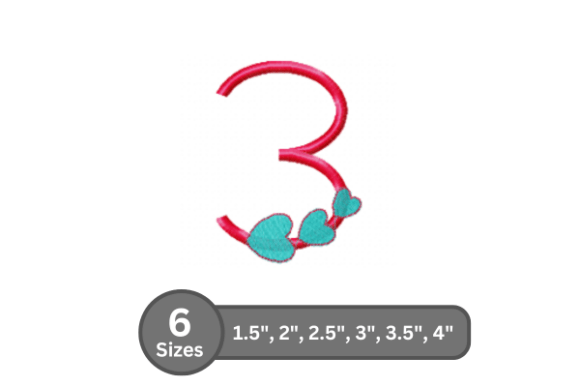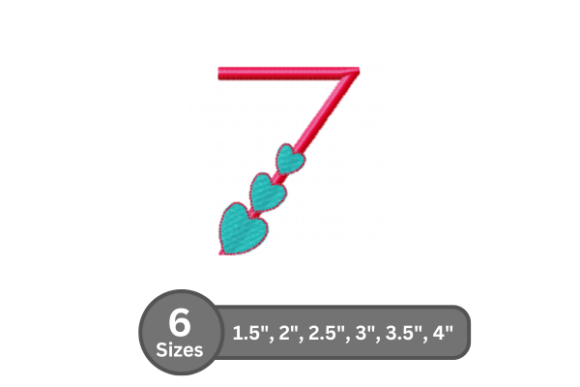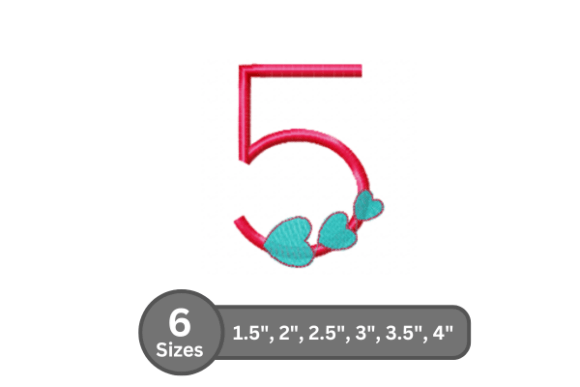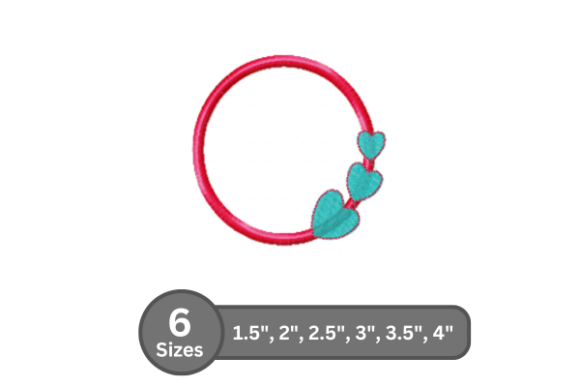
Candy Heart Number -6: A Sweet, Stitch-Ready Font for Real Projects
First Impressions: Playful, Polished, and Purpose-Built
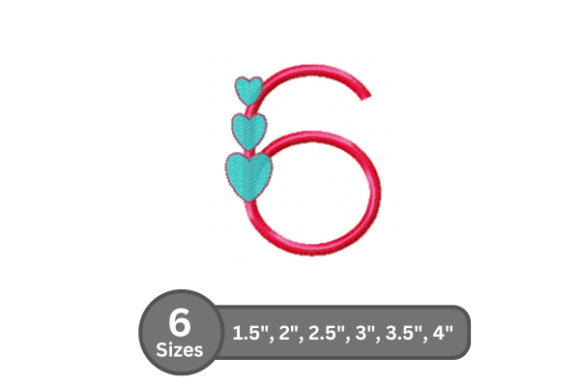
When I opened Candy Heart Number -6 on my embroidery software, I immediately noticed what sets it apart from generic heart-themed fonts: intention. This isn’t just a cartoonish number with hearts tacked on—it’s a fill stitch embroidery font carefully digitized for smooth stitching and professional results. The curves are generous but controlled, the heart accents integrate seamlessly into each numeral (no floating or awkward joins), and the overall weight feels balanced—not too light to vanish on textured fabric, not so dense it risks puckering on delicate items. It carries a cheerful, school-appropriate energy without veering into juvenile clutter—ideal for classroom tote bags, personalized lunchboxes, or nursery decor where warmth and clarity both matter.
Fits Naturally Into Real Handmade Workflows
I tested Candy Heart Number -6 across several live project types: a cotton twill apron for a local bakery teacher, a set of organic cotton baby blankets for an Etsy listing, and a batch of denim tote bags for a craft fair pop-up. In every case, the font held up—not as a novelty, but as a functional machine embroidery design that enhanced the item’s story. On the apron, “#6” stitched cleanly in 8mm height with minimal stabilizer—no distortion around the curved waistband. On the baby blankets, I used it at 12mm for gentle contrast against soft minky backing; the fill stitch density stayed even, no skipped areas or thread nesting. And on the totes? It scaled beautifully from 10mm (for small front pockets) to 18mm (centered on the main panel), retaining its rounded charm without losing legibility.
Performance Notes Across Common Surfaces
- Sweatshirts & stretchy fabric: Paired with medium-weight cutaway stabilizer, Candy Heart Number -6 stitched without stretching or misalignment—even on ribbed cuffs. The heart details remained crisp, thanks to thoughtful stitch direction changes built into the digitizing.
- Caps & curved surfaces: At 10mm height, it worked well on structured front panels. I avoided going smaller than 8mm here—the heart motifs begin to lose definition in tight curves, and fill stitch density can compress unpredictably.
- Dark fabric & low-contrast thread: Tested on navy terry kitchen towels with light pink thread: the fill stitch coverage was full and opaque, no ghosting. That’s critical when you’re selling handmade products where clean presentation builds buyer trust.
- Frequent-wash items (baby blankets, towels, aprons): After three gentle machine washes and air drying, the stitches retained shape and tension—no fraying or loosening around the heart contours. That durability speaks to smart underlay and consistent stitch length.
Where It Adds Tangible Value—Beyond Just Looks
As someone who sells custom apparel and digital embroidery files, I pay close attention to how a design affects perceived value—and Candy Heart Number -6 elevates more than just text. When used on a personalized pillow cover (“Baby #6”), it transforms a standard item into a keepsake-grade personalized gift. Customers notice the care in the details: how the heart nestles into the curve of the “6”, how the satin-like sheen of the fill stitch catches light in product photos, how it reads clearly even in lifestyle mockups. For Etsy sellers and boutique owners, that translates directly to stronger visual storytelling, higher engagement on social posts, and improved conversion on listings tagged with “school embroidery” or “nursery decor.” It also supports brand consistency—if your shop leans into warm, handmade aesthetics, this font reinforces that voice without needing custom lettering every time.
Practical Tips Before You Stitch
Even a well-digitized Creative Fabrica embroidery file deserves real-world prep. Here’s what I do before committing Candy Heart Number -6 to a customer order:
- Always run a test on scrap fabric matching your final substrate—especially for textured weaves or blends.
- Check thread color contrast early. Light thread on dark fabric? Great. But avoid near-matching tones—the heart details rely on subtle dimension, not just hue.
- Review stitch density in your software. If scaling below 8mm, zoom in: some fill areas tighten noticeably. Adjust density manually if needed—or stick to the recommended size range.
- Confirm hoop size compatibility. This design fits comfortably in a 4x4 hoop at standard sizes (8–14mm), but double-check before hooping delicate garments.
- Compare light/dark fabric mockups side-by-side. What reads sweet on ivory may read muddy on charcoal—small tweaks in thread choice make a big difference.
- Use appropriate stabilizer: tear-away for stable wovens, cutaway for knits or high-wear items like aprons and towels.
- Inspect small details post-stitch—especially the inner curves of the heart and the base of the “6”. A quick snip of stray threads preserves that polished look.
- Finally, revisit the Creative Fabrica product page. Verify licensing terms for commercial embroidery use—especially if you’re selling finished products or bundling it into kits.
A Thoughtful Tool—Not Just Another Font
Candy Heart Number -6 doesn’t try to be everything. It’s not a script font for elegant monograms, nor a bold block for athletic wear. It’s a focused, joyful embroidery file built for moments that call for sincerity and sweetness—first-day-of-school excitement, baby milestones, classroom pride, or handmade gifts meant to last. As a working embroidery designer, I appreciate that it saves time without sacrificing quality, and that it helps my clients’ products feel intentionally crafted—not mass-produced. Whether you’re digitizing your own applique design, building a library of design assets, or simply choosing the right digital embroidery file for your next Etsy launch, Candy Heart Number -6 earns its place—not as filler, but as a reliable, expressive tool in your creative toolkit.