Leopard Coquette Pencil Teacher Bow
A Bold, Playful Statement for Small Business Branding
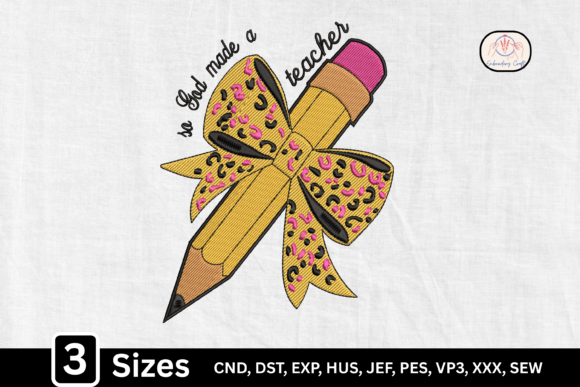
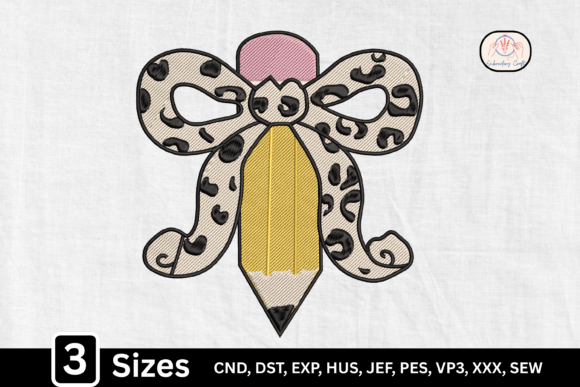
As an embroidery designer who’s developed hundreds of commercial designs for boutiques, cafés, studios, and handmade brands, my first impression of the Leopard Coquette Pencil Teacher Bow is immediate: it’s unapologetically feminine, confidently playful, and visually charged with personality. The title alone signals a fusion of wild elegance (leopard) and sweet charm (coquette, bow, pencil)—a rare balance that resonates across creative small businesses far beyond its School category. This isn’t just classroom decor—it’s a versatile machine embroidery design built to elevate brand identity through contrast, character, and cohesion.
Where Leopard Coquette Pencil Teacher Bow Shines in Real Business Use
In practice, the Leopard Coquette Pencil Teacher Bow performs exceptionally well as a signature accent—not as a full-cover motif, but as a strategic brand marker. For embroidered patches, its oversized bow shape provides generous real estate for clean stitch definition, making it ideal for iron-on or sew-on patches on tote bags, aprons, and staff jackets. On caps, it reads clearly at 2.5–3 inches wide when placed on the front panel—especially when paired with a subtle monogram or business name beside it.
Cafés and florists use it on linen aprons to soften uniform rigidity without sacrificing polish; pet brands apply it to bandana tags and collar charms for a wink of whimsy; bakeries embroider it onto cotton tea towels and reusable produce bags—adding instant visual warmth and memorability. As a tote bag design, it anchors the lower corner beautifully, giving handmade product packaging a boutique-level finish. And because it leans into pattern (leopard print) rather than literal illustration, it avoids looking dated or overly juvenile—key for small business merch targeting adult customers.
Use With Intention: Placement & Fabric Considerations
The Leopard Coquette Pencil Teacher Bow demands thoughtful application. Its “cute oversized bow” structure and “full leopard print pattern” introduce variables that affect performance on curved or textured surfaces. Avoid placing it directly over seams, elbow joints, or high-flex zones on uniforms—stitch density can crack or pucker without proper stabilization. On dark uniforms, test thread color contrast rigorously: leopard print relies on tonal variation, so low-contrast thread choices will mute its impact and weaken recognition.
For cap embroidery, confirm whether the design fits comfortably within standard front-panel hoop sizes—some versions may require repositioning or slight scaling. On tiny items like enamel pin backings or mini product labels, scale down only after testing at 1.75 inches: fine details in the bow’s loops or leopard texture may collapse or blur. Likewise, avoid dense fabrics like heavy canvas or quilted tote exteriors unless you pair the embroidery file with cutaway stabilizer and reduce stitch density manually—otherwise, the finished product risks stiffness or distortion.
How It Strengthens Brand Identity & Customer Trust
Small businesses thrive on authenticity and visual consistency—and the Leopard Coquette Pencil Teacher Bow delivers both when used intentionally. Its fierce-yet-feminine energy communicates approachability *and* confidence, which builds trust with customers who value craftsmanship and personality in handmade product presentation. When repeated across aprons, tote bags, and staff caps, it becomes a recognizable motif—like a signature stamp—that reinforces brand recall without needing a logo lockup.
Unlike generic floral or script motifs, this design carries narrative weight: it suggests creativity, care, and quiet rebellion against bland corporate aesthetics. That resonance translates directly to buyer engagement—Etsy sellers report higher click-throughs and repeat purchases when using it as a cohesive element across listings and printable mockups. For crafters launching new lines, it functions as a ready-made design asset that aligns with modern expectations of premium, intentional branding—even before custom typography or color palettes are finalized.
Practical Embroidery Designer Notes for Commercial Use
Before committing to production, always:
- Test in black and white first—to assess contrast, clarity, and negative space balance;
- Check scalability—verify how the Leopard Coquette Pencil Teacher Bow holds up at 2 inches wide for patches and 1.5 inches tall for sleeve accents;
- Review thread color recommendations—especially for leopard print sections, where subtle shifts in tan, brown, and cream threads dramatically affect realism;
- Inspect spacing between bow loops and pencil elements—tight gaps may close up on knit fabrics or during washing;
- Confirm hoop size compatibility—standard 4×4 or 5×7 hoops should suffice, but verify before digitizing adjustments;
- Test on your target fabric—run samples on actual apron linen, twill caps, or canvas tote material—not just stabilizer swatches;
- Use appropriate stabilizer—cutaway for stretch fabrics, tear-away for stable wovens, and fusible for lightweight linens;
- Create a client-ready mockup before final approval—show it on multiple garment types and backgrounds;
- Compare alongside existing design assets—does it harmonize with your current font suite, color palette, and iconography?
- Confirm commercial licensing before use in custom apparel, wholesale merchandise, or digital resale—this is essential for Etsy sellers and embroidery shops offering commercial embroidery services.
Final Thought: A Design That Works Harder Than It Looks
The Leopard Coquette Pencil Teacher Bow isn’t just decorative—it’s functional branding infrastructure. In a market saturated with safe, forgettable motifs, it offers distinctiveness without sacrificing wearability or professionalism. Whether stitched onto a barista’s apron, a florist’s tote, or a teacher’s cap, it signals intentionality, warmth, and creative authority. For embroidery shops and small business owners alike, it’s not just another digital embroidery file. It’s a conversation starter, a consistency anchor, and a smart investment in long-term brand identity—one bold, beautiful stitch at a time.