My Unicorn Ate My Homework
A Craft Fair Designer’s Real-World Review
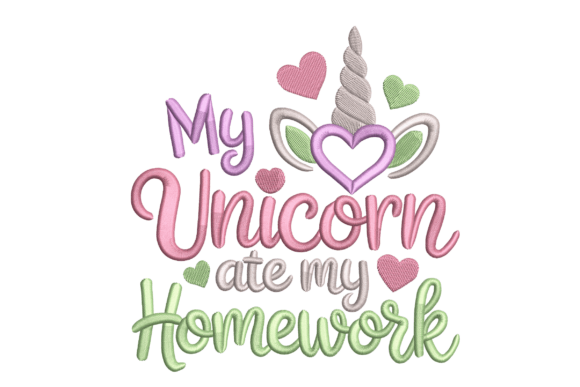
As an embroidery designer who’s prepped over 200 craft fair booths—from Portland maker markets to Nashville school-themed pop-ups—I approach every new machine embroidery design like a buyer scanning a crowded table: Does it stop the scroll? Does it translate from screen to shelf? Does it hold up under real-world production pressure? That’s exactly how I tested My Unicorn Ate My Homework. It’s not just cute—it’s commercially smart, emotionally resonant, and surprisingly versatile for a School-category Embroidery file.
First Impression: Playful, Punchy, and Instantly Relatable
My Unicorn Ate My Homework lands as bold, funny, and modern—not precious or overly cutesy. There’s zero farmhouse softness or minimalist restraint here. It’s got personality with purpose: a wink at student stress, a nod to magical thinking, and a built-in conversation starter. At a craft fair, that kind of energy cuts through visual noise. Shoppers pause. Kids point. Parents laugh—and then reach for their wallets. It feels handmade without looking amateurish, and premium without demanding premium pricing.
Where It Shines on Craft Fair Products
- Tote bag design: Perfect as a centered 4–5" chest placement. The unicorn’s horn and playful lettering scale beautifully on canvas or cotton duck—clear, legible, and joyful even from six feet away.
- Apron embroidery: Works brilliantly above the pocket or along the waistband. The whimsical tone balances utilitarian fabric, making functional wear feel special.
- Tea towel embroidery: Holds up well on medium-weight linen-cotton blends—but avoid dense terry or heavily textured towels unless you double-stabilize. Best placed in the lower third for visual weight.
- Embroidered patch: Ideal for iron-on or sew-on versions. Clean outlines and moderate stitch density mean crisp edges after cutting and heat-sealing.
- Caps and curved surfaces: Proceed with caution. The lettering and unicorn details may distort on low-profile caps unless digitized with curve compensation. Test on scrap first.
- Fabric pouches & pillow covers: Excellent as a focal motif on front panels. Looks especially strong on oat, blush, or navy backgrounds—thread colors pop without competing.
- Market bags & small shop product displays: Sells consistently when paired with matching vinyl stickers or printed tags reading “Yes, it’s true.” Adds narrative charm to any handmade product lineup.
What Makes It Sell—Beyond the Smile
This isn’t just a novelty; it’s a strategic craft fair product. It photographs exceptionally well for Etsy seller listings—bright, clean, and full of contrast. The phrase “My Unicorn Ate My Homework” is instantly searchable, memorable, and shares well on Instagram Reels (think time-lapse stitching + a kid’s dramatic sigh). As a digital embroidery file, it supports repeatable batch production: consistent sizing, balanced fill areas, and no excessive underlay that slows down machines. That means faster turnaround for custom orders and tighter margins for your small shop.
Careful-Use Notes Every Designer Should Know
Don’t skip testing—even with “easy to stitch” claims. Here’s what to watch:
- Dense stitch areas: Unicorn mane or tail sections may compress on thick fabrics like denim or quilted tote linings. Use cutaway stabilizer, not tear-away.
- Tiny details: Eyes or horn highlights can blur on dark fabric or low-thread-count cotton. Boost contrast with metallic or high-sheen thread—or simplify those elements manually.
- Small lettering: Avoid scaling below 3". At 2.5", spacing tightens and readability drops—especially under booth lighting or phone-camera capture.
- Fabric texture: Highly napped or looped fabrics (like some tea towels) swallow fine detail. Opt for smoother weaves or increase stitch density slightly during test runs.
- Curved cap surfaces: If offering embroidered caps, confirm whether the embroidery file includes alternate digitizing for headgear—or budget time to adjust spacing manually.
Why It Strengthens Your Booth & Brand
My Unicorn Ate My Homework doesn’t just decorate fabric—it elevates perceived value. Customers associate playful, well-executed embroidery with care, creativity, and confidence. When displayed alongside neutral-toned aprons or minimalist tea towels, this design becomes your booth’s joyful anchor. It draws families, teachers, grad students, and nostalgic adults alike. And because it fits cleanly within School themes without feeling juvenile, it extends your seasonal relevance—back-to-school, graduation, teacher appreciation, even end-of-year “survivor” gifts.
Pro Designer Checklist Before You Stitch
- Test the machine embroidery design on scrap fabric matching your final product’s weight and weave.
- Check thread contrast—especially on light/dark fabric pairings. Print a printable mockup side-by-side for comparison.
- Review spacing between letters and unicorn elements—tight kerning can cause skipped stitches at speed.
- Confirm hoop size compatibility with your machine and intended product (e.g., 5x7" works for most totes; 4x4" limits placement options).
- Inspect stitch density in the unicorn’s body vs. text—balance prevents puckering or stiffness.
- Match stabilizer to fabric: cutaway for stretchy knits, tear-away for stable wovens, fusible for lightweight patches.
- Create at least one real-world finished product—not just a hoop sample—to assess drape, wear, and customer appeal.
- Compare thread colors across fabric swatches—what looks vibrant on white may mute on heather gray.
- Verify commercial licensing terms before selling finished items—this is non-negotiable for commercial embroidery use.
Bottom line? My Unicorn Ate My Homework earns its spot in your design assets library—not because it’s trendy, but because it converts. It’s joyful, practical, scalable, and unmistakably handmade. In a sea of samplers and script fonts, it’s the piece that makes someone say, “I need that—and I need it *now*.” That’s not just embroidery. That’s craft fair magic.