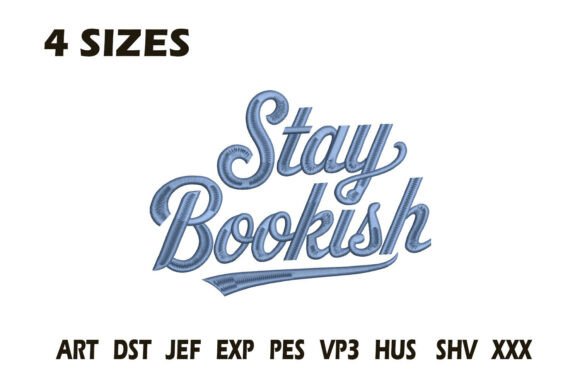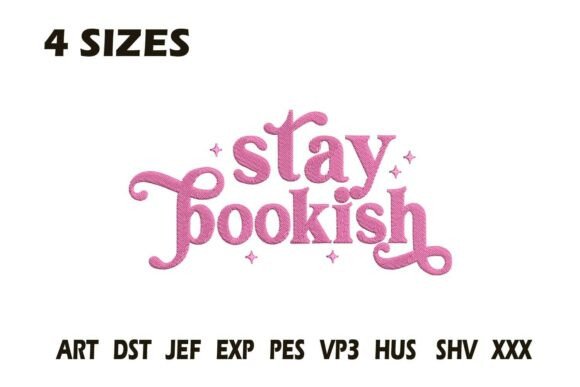
Stay Bookish Embroidery Design
A Practical Review for Small Business Merch & Branded Patches
As an embroidery designer who’s developed hundreds of commercial designs for cafés, boutiques, florists, bakeries, and handmade studios, I approach every new machine embroidery design with two questions: “Does it tell a brand story?” and “Will it hold up in real-world production?” When I first saw the Stay Bookish Embroidery Design, its title immediately signaled warmth, approachability, and quiet confidence — not loud or trendy, but timeless enough to feel at home on a vintage apron, a linen tote, or a staff cap. The description — “a playful embroidery design” that brings “charm to your fabrics” — confirms this is intentionally whimsical, not childish; clever, not cutesy. That distinction matters deeply when building brand identity for a small business.
How Stay Bookish Embroidery Design Performs Across Real Business Applications
This design shines where authenticity and personality intersect with professionalism. On a staff apron for a neighborhood bookstore café? Perfect — it reads as welcoming, literate, and human-scaled. As an embroidered patch sewn onto denim jackets for a local creative studio’s team uniforms? It adds cohesion without shouting. As a chest accent on custom apparel for a school-themed gift shop or indie stationery brand? It bridges nostalgia and modern craft sensibility. Even on a woven tote bag used for customer gifts or event merch, Stay Bookish Embroidery Design delivers visual weight without overwhelming the fabric.
It also works well for subtle branding moments: a sleeve detail on work shirts, a cap front for retail staff, or a discreet corner accent on product packaging tags. Because it leans into charm rather than complexity, it avoids looking cluttered on textured fabrics like canvas, linen, or brushed cotton — all common choices for small business merch. And unlike highly detailed monograms or dense script logos, this design maintains legibility at mid-range sizes (2.5"–3.5"), making it ideal for apron embroidery, cap embroidery, and tote bag design where clarity trumps ornamentation.
Where to Use Stay Bookish Embroidery Design With Intention
Like any thoughtful digital embroidery file, Stay Bookish Embroidery Design has smart boundaries. Avoid scaling it down below 1.75" — especially for patches or cap fronts — unless you’ve verified letter spacing and outline integrity in your embroidery software. Tiny lettering can blur or skip stitches on curved surfaces (like baseball caps) or high-stretch knits (like performance tees), so always test on the exact fabric you’ll use.
Also consider stitch density: if the original file includes fine interior details or tight flourishes, those may require extra stabilizer on lightweight or loosely woven materials. Dark uniforms? Confirm contrast by testing thread colors — rich navy or charcoal thread often reads warmer and more inviting than black on deep backgrounds. And remember: frequent washing affects longevity. For items like staff aprons or reusable totes, pair this design with quality polyester thread and a medium-weight cutaway stabilizer to prevent puckering over time.
Strengthening Brand Identity Without Sacrificing Craft
What makes Stay Bookish Embroidery Design especially valuable for small businesses isn’t just its aesthetic — it’s how it supports perception. Customers don’t just see a logo; they register tone. This design signals thoughtfulness, creativity, and grounded confidence — qualities that build trust faster than generic clip art or overdesigned vectors. When stitched cleanly on a handmade product or boutique merchandise tag, it elevates perceived value. When repeated across multiple touchpoints (caps, totes, aprons), it reinforces visual consistency without feeling repetitive.
For Etsy sellers and craft-based brands, it’s a rare asset: friendly enough to resonate with broad audiences, yet distinctive enough to stand out in a crowded feed. Used alongside hand-lettered packaging or printable mockups, it strengthens the handmade presentation — not as decoration, but as intentional brand language.
Essential Embroidery Designer Notes Before Production
Before committing to bulk runs or client delivery, here’s what I always do with a new embroidery file like Stay Bookish Embroidery Design:
- Test in black and white first — eliminates color bias and highlights spacing, density, and balance.
- Check minimum viable size — resize to 1.75" and 2" to confirm readability and stitch integrity.
- Review thread color contrast — especially on dark or textured fabrics; avoid relying solely on on-screen previews.
- Inspect spacing between elements — tight kerning or overlapping shapes may cause nesting issues during stitching.
- Confirm hoop size compatibility — ensure the design fits within your standard hoops (e.g., 4x4", 5x7") without excessive rehooping.
- Test on real fabric + stabilizer combo — simulate final garment conditions, including wash-and-wear cycles.
- Create a printable mockup for client approval — shows scale, placement, and context before stitching begins.
- Compare beside existing design assets — does it harmonize with your current logo, typography, or color palette?
- Verify commercial licensing — since this is intended for commercial embroidery and small business use, confirm usage rights cover resale, branded patches, and digital distribution (e.g., for Etsy sellers offering finished goods).
While the product description mentions suitability for t-shirts, towels, and home decor, remember that “School” as a category hints at broader resonance — think learning studios, literacy nonprofits, teacher-led brands, or even pet businesses with “bookish” names (e.g., “The Well-Read Hound”). Its versatility lies in its restraint.
In short: Stay Bookish Embroidery Design isn’t just another decorative motif. It’s a quietly strategic tool — one that helps small businesses communicate warmth, intelligence, and care through the tactile language of thread. Used with intention, it becomes part of the story customers choose to carry — literally — on their sleeves, bags, and aprons.