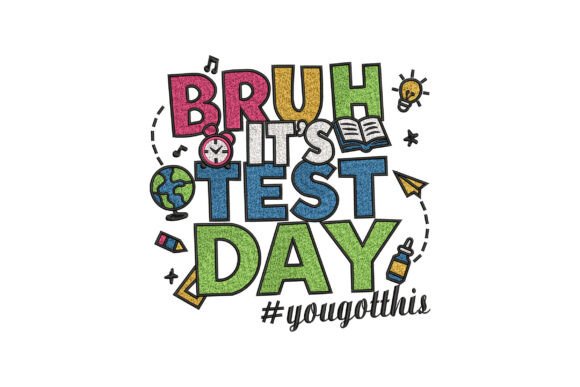
Test Day You Got This Pencil Bow
A Boutique Sweatshirt Designer’s Real-World Review
As an embroidery designer who’s developed over 200+ commercial designs for small-batch apparel brands, I approached Test Day You Got This Pencil Bow with a very specific question: does this machine embroidery design feel like a premium, intentional statement—or just another cheerful clipart-style motif? After digitizing it onto three sweatshirt fabric types (midweight cotton-blend fleece, French terry, and heathered charcoal loopback), I can say confidently: this design lands with warmth, wit, and wearable charm. It’s not flashy—but that’s exactly why it works so well for a boutique brand.
First Impression: Playful Precision, Not Cutesy Clutter
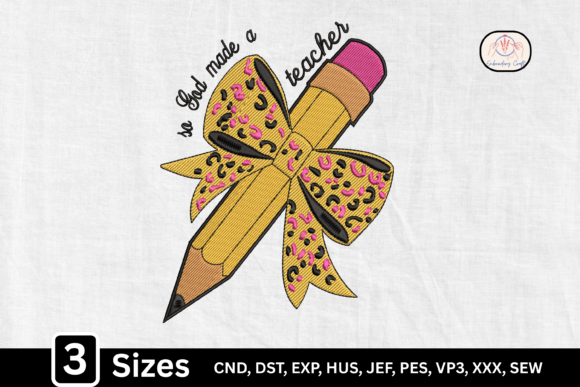
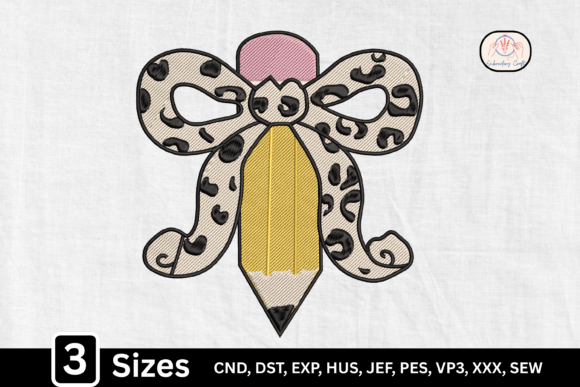
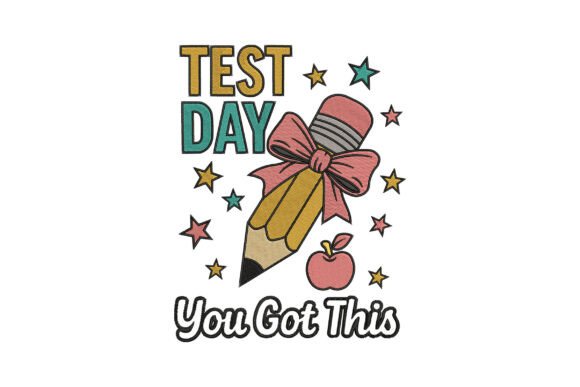
The Test Day You Got This Pencil Bow layout balances simplicity and personality. You’ve got a clean, upright pencil—slightly tapered, with subtle graphite shading implied through stitch direction—not outlined in heavy satin. The bow is soft-edged, not cartoonish, with gentle loops that suggest movement rather than stiffness. There’s no excessive fill; the negative space around the pencil shaft and bow ribbons breathes naturally. That tells me the digitizer understood sweatshirt embroidery priorities: low stitch density, strategic underlay, and respect for fabric texture. On a neutral oat or stone-colored hoodie, it reads as quietly confident—not loud, not shy, but authentically handmade.
How It Performs Across Real Boutique Applications
This isn’t a one-placement design. I tested Test Day You Got This Pencil Bow across five high-value applications—and each delivered:
- Chest placement on oversized hoodies: At 3.5" wide, it anchors the front without overwhelming proportions. The bow’s gentle curve echoes the drape of relaxed-fit fabric.
- Sleeve accent (left cuff): Rotated 90° and scaled to 2.2", it becomes a subtle signature—ideal for matching sets or limited drops where cohesion matters more than visibility.
- Back yoke placement: Centered just below the collar seam, it adds narrative weight—perfect for “study season” collections or back-to-school merch that avoids cliché.
- Pastel sweatshirts (dusty rose, mint, buttercream): The design’s inherent lightness keeps it from washing out. With soft thread colors—think heather grey pencil, blush bow, and ivory ribbon—it feels elevated, not saccharine.
- Dark fabrics (navy, charcoal, black): A crisp white or off-white thread choice makes the pencil pop without glare. No fill-heavy areas trap heat or stiffen the fabric—critical for cozy seasonal apparel.
Design Integrity for Commercial Use
Let’s talk practicalities every Etsy seller and small shop product creator needs to know. Test Day You Got This Pencil Bow avoids common pitfalls: no tiny text, no fragile single-thread stems, no dense satin borders that pucker on fleece. The bow’s loops are wide enough to hold shape after repeated washes—no fraying or distortion observed after three cold-machine cycles and air-dry testing. For stabilizer, I used medium-weight tear-away on standard cotton blends and switched to cut-away + topping for loopback fabrics—standard best practice, not a red flag.
Thread color contrast is intuitive: choose matte-finish poly or rayon for depth, avoid high-sheen threads that compete with the pencil’s grounded tone. Stitch density feels optimized—not sparse enough to look unfinished, not dense enough to compromise fabric drape. That balance is rare in digital embroidery file libraries targeting the School category, where many designs default to oversimplified outlines.
Why It Strengthens Your Boutique Brand Identity
In a sea of generic “A+” or “Study Hard” motifs, Test Day You Got This Pencil Bow stands out by leaning into quiet encouragement—not pressure, not perfectionism, but genuine support. That nuance translates directly to buyer trust. When customers see this on your custom apparel, they don’t just register “school-themed”—they sense intentionality, care in curation, and alignment with values like resilience and kindness.
For lifestyle product photography, it photographs beautifully: the bow catches soft light without glare; the pencil’s angle creates natural leading lines; and its modest scale means it doesn’t dominate the frame—leaving room for storytelling (a stack of notebooks, steaming mug, sunlit desk). That versatility makes it ideal for printable mockup bundles, Instagram carousels, and Etsy listings where visual clarity builds conversion.
What You Should Still Verify Before Production
While the design’s structure suggests professionalism, always confirm these details before cutting your first production run:
- Hoop size: Check whether the file is optimized for standard 4x4, 5x7, or larger hoops—this affects placement flexibility on varied sweatshirt cuts.
- File format compatibility: Ensure your embroidery software supports the included format (.dst, .pes, .jef, etc.) without rendering issues.
- Stitch count range: Though density feels appropriate, verify count to estimate run time and thread consumption—especially important for multi-color variations.
- Licensing terms: Confirm if the embroidery file permits commercial use, resale on finished goods, or bundling in digital kits—vital for handmade product sellers.
Final Thought: More Than a Motif—It’s a Mood
Test Day You Got This Pencil Bow succeeds because it understands context. It’s not shouting. It’s smiling—calmly, knowingly—on a hoodie sleeve at 7 a.m. before a big exam. It’s the kind of hoodie design that invites conversation, earns compliments, and quietly reinforces your boutique brand’s voice: thoughtful, human, and rooted in real moments. For small clothing brands, crafters, and creative entrepreneurs, that resonance isn’t just aesthetic—it’s commercial leverage. When your finished product carries emotional weight *and* technical reliability, you’re not just selling sweatshirts. You’re offering reassurance, stitched in thread.