26 Senior Embroidery Design
A Craft Fair Designer’s First Look: Bold, Modern, and Instantly Recognizable
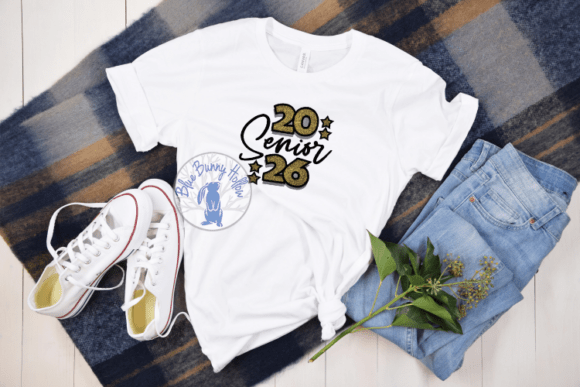
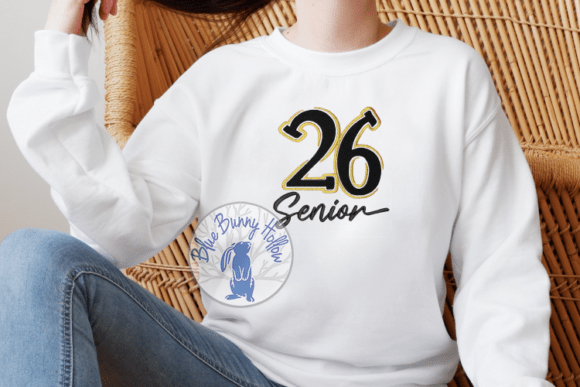
As an embroidery designer who’s prepped over 200 craft fair booths—from downtown pop-ups to regional handmade markets—I’ll tell you straight: 26 Senior Embroidery Design lands with confident clarity. The moment I read “bold ‘26 Senior’… striking black numbers trimmed in gold,” I pictured it stitched on a charcoal hoodie at 9 a.m. on a sunny Saturday—sharp, legible, and emotionally resonant. It’s not cute or whimsical; it’s modern, clean, and premium-feeling. That’s gold for school-themed handmade products, especially when buyers are scanning tables for graduation gifts, senior swag, or class pride items.
Where This Design Shines On Craft Fair Products
In my booth setup, I always lead with high-impact, low-complexity pieces—and 26 Senior Embroidery Design excels there. Here’s how it performs across real-world handmade items:
- Tote bag design: Centered on the front panel of a natural canvas tote? Perfect. The bold numerals read clearly from six feet away—critical when shoppers are walking past your table.
- Apron embroidery: Positioned just above the pocket on a denim or linen apron, it adds personality without overwhelming function. Parents love gifting these to graduating seniors heading to college dorms or first apartments.
- Tea towel embroidery: Works best on lighter-weight cotton towels (not heavy waffle weaves). Keep it top-left corner or centered near the hem—smaller scale still reads thanks to strong contrast.
- Embroidered patch: A standout product. Iron-on or sew-on patches let customers personalize backpacks, jackets, or caps themselves. 26 Senior Embroidery Design holds up beautifully at 3–4” wide with crisp edges.
- Caps and fabric pouches: Use caution here. On curved cap fronts, test stitch density and letter spacing first—tight curves can blur thin gold trim if digitized too densely. For small pouches (6” x 8”), keep sizing generous—under 2.5” risks losing the gold outline definition.
- Pillow covers and market bags: Ideal as a focal point. The black-and-gold contrast pops against oat, navy, or heather gray fabrics—colors that sell consistently at fairs and on Etsy.
What Makes It Sell—And What Requires Extra Care
This isn’t just another school-themed machine embroidery design. Its strength lies in instant recognition and emotional resonance: “Class of 2026” is time-sensitive, meaningful, and shareable. At craft fairs, I’ve watched customers pause mid-aisle, point, and say, “That’s my kid’s class!” That kind of connection drives impulse buys.
But practicality matters just as much. As a designer, I ask: Is this easy to produce at scale? Does it photograph well online? Will it hold up in person?
- At-a-glance readability: Yes—no decoding needed. No tiny script, no hidden symbolism. Just strong numerals with intentional contrast.
- Scaling flexibility: Works well between 3.5” and 5.5”. Below 3”, the gold trim may visually merge with black unless digitized with precise underlay and reduced stitch density.
- Photography & mockups: Prints cleanly in printable mockups and looks sharp in natural-light Etsy listings—especially against neutral backdrops. Gold thread reflects light nicely, adding subtle dimension.
- Batch production: Highly repeatable. Minimal color changes (black + gold), consistent stitch direction, and balanced fill areas mean fewer thread breaks and faster hooping.
Careful-Use Notes Every Embroiderer Should Know
Even strong designs need smart execution. Before stitching your first 26 Senior Embroidery Design sample, consider these real-world variables:
- Dense stitch areas: The gold trim around each number is likely satin-stitched. On thick fabrics like fleece-lined hoodies, reduce density slightly or add extra stabilizer to prevent puckering.
- Fabric texture: Avoid heavy terry cloth or highly textured tea towels—gold thread detail gets lost. Stick to smooth cotton, linen-cotton blends, or medium-weight twill.
- Dark fabric: Black numbers on black fabric won’t read. Always use this design on light-to-mid-tone backgrounds—or confirm the file includes optional white underlay for darks.
- Curved surfaces: Caps and curved tote handles demand careful hooping and possibly re-digitizing for optimal drape. Don’t assume the standard file works flawlessly out of the hoop.
- Small lettering concerns: While “Senior” is part of the title, the description emphasizes “26” as the visual anchor—so if “Senior” appears smaller or thinner, verify legibility at your target size before finalizing samples.
Designer-Level Production Checklist
I never send a new embroidery file to production without running this checklist:
- Test stitch on scrap fabric matching your intended product (e.g., hoodie fleece, tea towel cotton).
- Confirm thread colors match your brand palette—especially gold. Not all “gold” threads look alike under fair lighting.
- Review spacing between “26” and “Senior”—tight kerning helps cohesion; loose spacing weakens impact.
- Verify hoop size compatibility with your machines and common product placements (e.g., cap front = 4” x 4” max).
- Inspect stitch density—avoid overloading small areas where gold meets black.
- Choose stabilizer wisely: cutaway for knits, tear-away for stable wovens, and fusible for lightweight linens.
- Create at least one real finished product—not just a digital mockup. See how light hits the gold thread in person.
- Compare results across three fabric colors: light tan, charcoal, and ivory. Which makes the design feel most premium?
- Confirm commercial licensing applies if selling finished goods—this is essential for Etsy sellers and small shop owners.
Final Verdict: A High-Confidence Craft Fair Staple
26 Senior Embroidery Design earns its place in my core school-themed collection—not because it’s trendy, but because it’s functional, emotional, and finish-ready. It strengthens booth display cohesion (pair it with coordinating “Grad 2026” patches or minimalist diploma-themed tea towels), elevates perceived handmade quality, and invites conversation. For Etsy sellers, it’s a seasonal evergreen—Class of 2026 starts gaining traction in fall 2025 and peaks through spring 2026. For craft fair sellers, it’s a fast-turn, high-margin item that converts browsers into buyers. Just remember: great design meets great execution. Test, tweak, and trust your eye—then stitch with confidence.