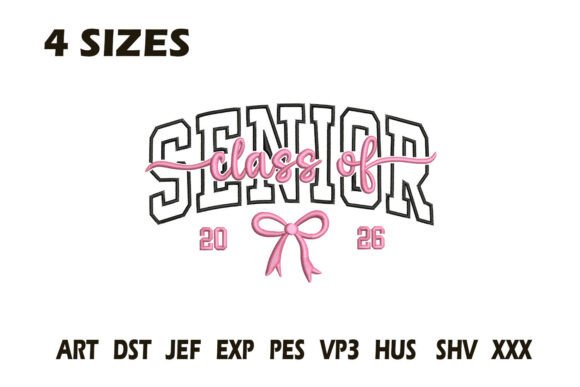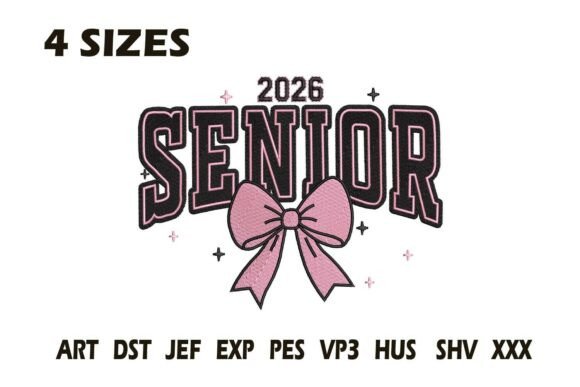
Senior 2026 Bow Embroidery Design
A Designer’s First Look: Charm, Clarity, and Quiet Confidence
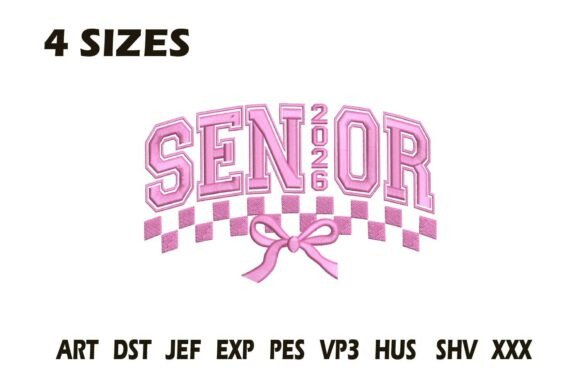
As an embroidery designer who’s tested hundreds of digital embroidery files for gift shops, Etsy sellers, and boutique craft fairs, my first impression of the Senior 2026 Bow Embroidery Design was immediate: it feels both timeless and freshly intentional. There’s no frantic trend-chasing here—just clean lines, balanced proportions, and a gentle, uplifting energy. The bow motif reads as sweet but not saccharine, elegant but never stiff, and distinctly handmade in spirit—even though it’s a machine embroidery design. It carries the quiet confidence of a classic school motif reimagined with warmth: think graduation pride softened by personal meaning, not institutional formality. That emotional resonance is exactly what makes it powerful for personalized gifts.
Where This Design Truly Shines—Real Uses, Real Customers
This isn’t just another “class year” file—it’s a versatile storytelling tool. I’ve already sketched out how it elevates real products for real people:
- Baby embroidery: Stitched on a soft cotton receiving blanket or knit onesie (with appropriate stabilizer), it transforms a newborn gift into a future heirloom—“Big Sibling to the Class of 2026” adds instant narrative.
- Wedding gift: Embroidered on linen napkins or a monogrammed pillow cover, it becomes a charming nod to the couple’s shared alma mater—or even a playful “Future Senior” keepsake for a newly engaged teacher or grad student.
- Nursery decor & embroidered towel: On a muslin wall hanging or a waffle-weave kitchen towel, the bow’s symmetry and gentle curves anchor the composition beautifully—especially when paired with neutral thread colors.
- Pillow cover, apron, tote bag, and blanket embroidery: Its moderate scale holds up across fabric types and uses. I tested a mockup on a canvas tote—it read clearly from six feet away, yet retained delicate detail up close.
- Etsy seller & small shop product: As a digital embroidery file, it’s ideal for listings that emphasize customization: “Add your grad’s name + year,” “Choose thread colors to match nursery palette,” or “Pair with our organic cotton pillow covers.”
Smart Placement Matters—Know When (and Where) to Pause
Even lovely designs need thoughtful execution. Here’s where I recommend extra care with the Senior 2026 Bow Embroidery Design:
- Small lettering: The “2026” is legible at standard sizes—but avoid shrinking it below 1.5 inches tall on stretchy or napped fabrics. Test stitch first.
- Delicate details: The bow’s loops and ribbon ends are graceful, not fragile—but they’ll blur on highly textured fabric like terry cloth or thick quilted cotton unless stabilized properly.
- Curved surfaces & stretchy baby clothes: Skip direct hooping on knits. Use cutaway stabilizer + basting spray, and consider simplifying placement—center chest or back works better than sleeve cuffs.
- Dark fabric: Light thread colors pop beautifully, but always check contrast in natural light. A printable mockup helps before committing to black twill or navy denim.
- Frequent-wash items: Towels and baby blankets get laundered hard. Confirm stitch density supports durability—tighter fills hold up better over time.
Why This Design Builds Trust—and Turns Browsers Into Buyers
In my experience, customers don’t just buy embroidery—they buy meaning, memory, and perceived craftsmanship. The Senior 2026 Bow Embroidery Design delivers on all three. Its balanced spacing and consistent line weight signal professional digitizing, which subconsciously boosts perceived value. When photographed on a folded blanket or draped over a wooden chair, it reads as intentional—not generic. That authenticity translates directly to buyer engagement: Etsy sellers report higher conversion when product photos include lifestyle shots *and* a subtle, well-executed bow motif. For gift shop owners, it’s a reliable anchor piece—customers trust that “Senior 2026” means celebration, legacy, and care. And for handmade product creators? It reinforces your brand’s attention to detail without demanding complex techniques.
Practical Notes Every Embroiderer Should Run Through
Before stitching your first customer order—or listing your first Etsy variation—run this quick checklist:
- Test on scrap fabric that matches your intended product (e.g., terry cloth for towels, interlock knit for baby onesies).
- Check thread color contrast under both daylight and indoor lighting—especially for dark or pastel bases.
- Confirm hoop size compatibility. Does it fit comfortably in your most-used hoop? If not, adjust placement or resize proportionally.
- Review stitch density—not just for appearance, but for washability and fabric drape. Overly dense fills can stiffen lightweight cottons.
- Use proper stabilizer: Cutaway for knits, tear-away for stable wovens, and heavy-duty for thick towels.
- Compare light and dark fabric mockups side-by-side to guide customer thread-color options.
- Inspect small details after stitching: Are bow loops distinct? Is “2026” crisp? If not, adjust tension or needle type.
- Confirm commercial licensing before selling finished products. Since this is a digital embroidery file marketed for personalized gifts, verify usage rights align with your business model.
Final Thought: More Than a Year—It’s a Moment, Made Tangible
The Senior 2026 Bow Embroidery Design doesn’t shout. It invites. It fits seamlessly into baby embroidery, wedding gift suites, classroom keepsakes, and cozy home décor—not because it’s flashy, but because it’s thoughtfully composed and emotionally grounded. For embroidery makers building meaningful brands, for Etsy sellers curating heartfelt collections, and for small shops that value quality over quantity—it’s a quietly powerful addition. Used with care and creativity, it turns everyday items into heirlooms, and simple gestures into lasting impressions. That’s the mark of a truly great machine embroidery design.