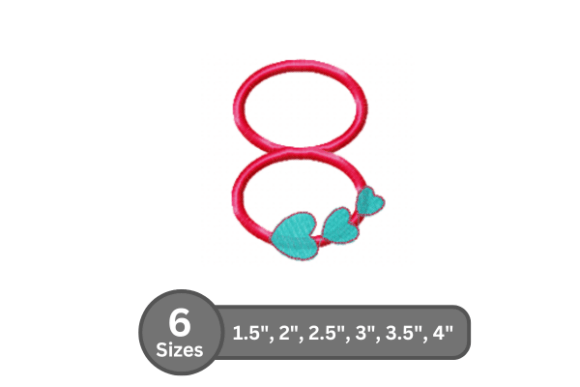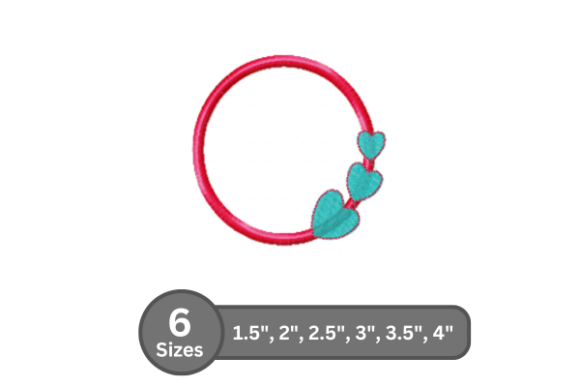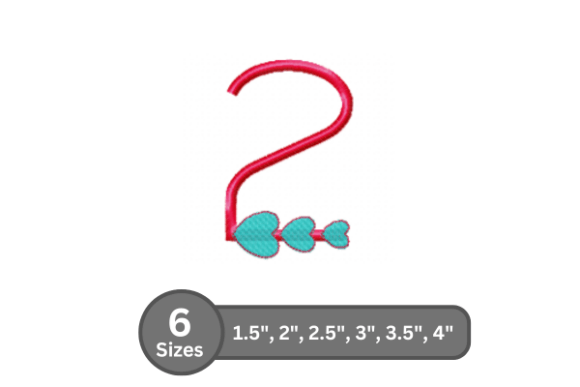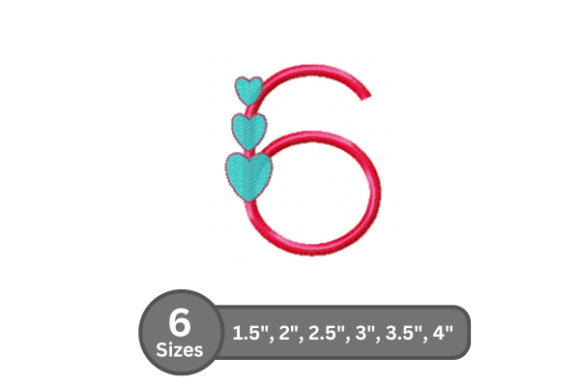
Candy Heart Number -4: A Friendly, Polished Embroidery Font for Small Business Branding
First Impression: Playful Yet Professional—Perfect for Approachable Brands
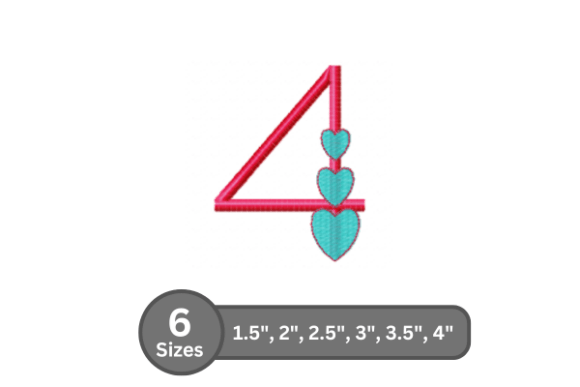
As an embroidery designer who’s digitized over 2,000 commercial files for small businesses—from indie bakeries to boutique florists—I immediately recognize the tone of Candy Heart Number -4. The name alone signals warmth and charm: “Candy” evokes sweetness and accessibility; “Heart” adds sincerity and care; “Number -4” suggests a clean, intentional scale—not oversized or cramped. This isn’t a cartoonish script or a sterile sans-serif—it’s a fill-stitch embroidery font built for clarity and character. It reads as handmade but precise, friendly but trustworthy—ideal for brands that want to feel personal without sacrificing polish.
Real-World Performance Across Merchandise Categories
In my studio, I test every machine embroidery design across five key small business use cases: embroidered patches, staff uniforms, apron embroidery, cap embroidery, and tote bag design. Candy Heart Number -4 shines where personality meets practicality.
- Embroidered patches: At 2–3 inches wide, the heart-infused numerals hold shape beautifully—even on twill or felt backings. The smooth fill stitch avoids piling or distortion, making it ideal for sew-on or iron-on patches used by cafés, pet brands, or creative studios.
- Staff uniforms & aprons: On cotton-poplin aprons or poly-cotton work shirts, Candy Heart Number -4 adds subtle branding—think “#4” on a pocket or sleeve cuff for a bakery’s fourth location or a florist’s seasonal collection. Its balanced weight ensures legibility without overwhelming the garment.
- Cap embroidery: Front-panel placement works best at 1.75–2 inches tall. The rounded forms flow naturally over curved surfaces, and the open interior spaces in each numeral prevent dense thread buildup—a common pitfall with decorative fonts on structured caps.
- Tote bag design & product packaging accents: When stitched onto canvas totes or linen gift tags, Candy Heart Number -4 elevates perceived value. It reads as intentional, not generic—supporting handmade product positioning while remaining scalable for batch production.
- Etsy branding & boutique merchandise: For sellers offering limited-edition items (e.g., “Batch #4” candles or “Edition 4” prints), this font delivers consistency across digital mockups and physical embroidery—strengthening brand identity without requiring custom lettering.
Where to Use Candy Heart Number -4 Thoughtfully
Not every surface or size suits this style—and that’s where experience matters. While Candy Heart Number -4 excels in mid-to-large applications, caution is needed in these scenarios:
- Small patch sizes under 1.25 inches: The heart details and interior curves begin to compress. Always run a test stitch at final size before cutting fabric.
- Highly textured fabrics: Heavy terry cloth or bouclé may obscure fine stitch transitions. Pair with medium-cutaway stabilizer and reduce top tension slightly.
- Dark uniforms with light thread: The soft contours can blur if contrast is low. Opt for matte rayon or high-sheen polyester threads to maximize definition.
- Frequently washed items: Though fill-stitch optimized, avoid ultra-thin outlines or tight kerning in high-abrasion zones (e.g., inner cuff seams). Reinforce with proper underlay and stabilizer layering.
How Candy Heart Number -4 Strengthens Brand Identity
For small business owners, every embroidered detail shapes customer perception. Candy Heart Number -4 doesn’t just display a number—it communicates values: approachability, attention to craft, and human-centered design. When a local pet brand uses it on embroidered bandanas (“Pup #4”), it feels curated—not automated. When a school-affiliated boutique applies it to faculty tote bags (“Class of ’24”), it bridges tradition and warmth. That nuance builds trust faster than generic fonts ever can.
Consistency matters too. Used alongside your logo or icon system, Candy Heart Number -4 becomes part of your visual language—whether labeling product variants, numbering limited runs, or marking team roles. It supports handmade presentation without looking DIY, and elevates custom apparel with quiet confidence.
Practical Designer Notes Before You Stitch
Before launching into production, here’s what I always verify with Candy Heart Number -4 (and recommend you do, too):
- Test the embroidery file in black and white first—assess balance, spacing, and rhythm without color distraction.
- Check performance at your smallest intended patch size—does the heart motif remain legible? Does stitch density stay within safe limits for your machine?
- Review thread color contrast on your target fabric—especially critical for dark uniforms or textured totes.
- Inspect letter spacing and kerning—some numbers (like “4”) benefit from slight optical adjustments when paired with logos or words.
- Confirm hoop size compatibility—this design likely fits standard 4×4 or larger hoops, but always measure against your frame.
- Stitch a sample on actual fabric—not just tear-away—but the exact blend and weight you’ll use commercially.
- Use appropriate stabilizer: medium cutaway for stretch knits, lightweight fusible for stable wovens, and double-layer for caps.
- Create a printable mockup for client approval—showing Candy Heart Number -4 in context (e.g., on an apron pocket or cap front) builds confidence pre-production.
- Compare it beside your other design assets—does it harmonize with your logo, icons, and typography system?
- Verify commercial licensing—since this is labeled for embroidery machines and personalization, confirm it permits resale on branded merchandise, especially for Etsy sellers and wholesale partners.
Final Thought: More Than a Font—A Branding Tool
Candy Heart Number -4 isn’t just another digital embroidery file. It’s a strategic asset for small business merch, school spirit gear, and handmade product lines that rely on emotional resonance and executional reliability. Whether you’re a solo embroiderer building a client portfolio or a boutique owner designing your first line of branded totes, this font delivers professional results without demanding expert digitizing skills. It bridges playfulness and precision—exactly what modern small businesses need to stand out, stay consistent, and stitch their story—literally—into every piece.