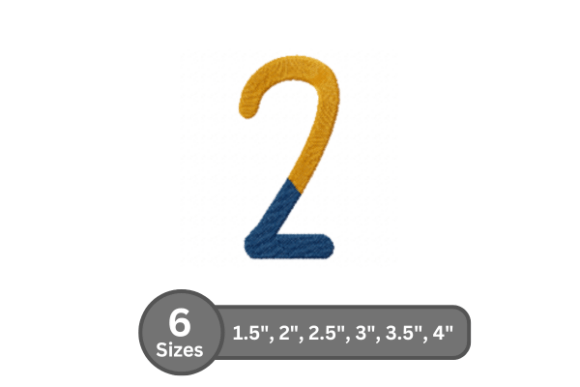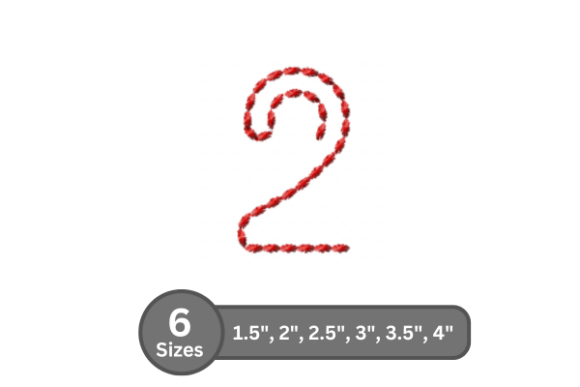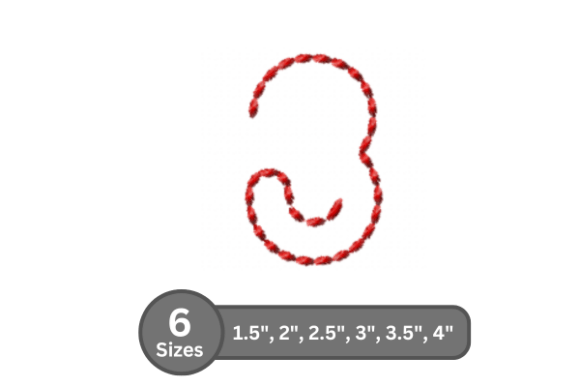
Soft Cord Number -0: A Craft Fair-Ready Embroidery Font
First Impression: Soft, Minimal, and Surprisingly Versatile
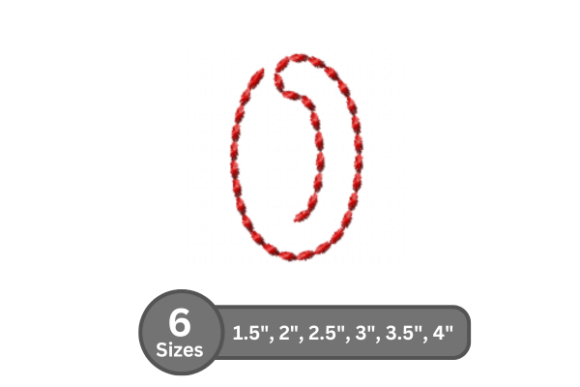
As an embroidery designer who’s prepped over 200 craft fair booths—and watched which fonts fly off tote bags while others gather dust—my first glance at Soft Cord Number -0 lands somewhere between “quiet confidence” and “handmade elegance.” It’s not bold or playful. It’s not rustic or vintage. It’s soft—literally in name, and visually in execution. The “cord” reference suggests gentle rounded edges and subtle weight variation, while “-0” hints at a neutral, zero-frills foundation. This isn’t a font that shouts from across the market aisle—it leans in, invites touch, and feels intentionally uncluttered. For School-themed handmade products (think teacher appreciation totes, student ID pouches, or classroom supply bags), it offers clean legibility without childish flair. And for general craft fair buyers? It reads as premium, thoughtful, and quietly modern.
Where It Shines on Real Craft Fair Products
On tote bags: Soft Cord Number -0 works beautifully as a centered monogram or small date stamp near the hem—especially on natural canvas or oat linen. Its fill-stitch construction holds shape without stiffness, so it doesn’t crack or pucker after repeated washes. Unlike script fonts, it reads instantly—even from three feet away.
On aprons and tea towel embroidery: This is where its softness becomes a selling point. Paired with a simple embroidered herb sprig or chalkboard-style label (“Bake,” “Brew,” “Teach”), Soft Cord Number -0 adds grounded numerals—like oven temps, recipe yields, or grade levels—that feel intentional, not tacked-on. Customers notice the cohesion: no visual competition, just calm utility.
On caps and curved surfaces: Proceed with caution—but not dismissal. Its smooth digitization helps, but avoid placing numbers smaller than ¾” tall on structured caps. On relaxed-fit dad caps or bucket hats? Yes—centered above the visor, in tonal thread, it reads as custom, not generic.
On embroidered patches and fabric pouches: Ideal. The fill stitch gives body without bulk, and its even density prevents curling at the edges. Use it for limited-edition batch numbers, year markers (“2024 Collection”), or subtle sizing labels (S/M/L) on reversible pouches—details that elevate a small shop product from “cute” to “curated.”
On pillow covers and market bags: At 2–3” wide, Soft Cord Number -0 becomes a quiet focal point—especially when stitched in matte cotton thread on textured linen or canvas. It photographs cleanly for Etsy listings and printable mockups, lending authenticity to your digital embroidery file listings without needing heavy filters or styling.
What Makes It Sell—And What Requires Care
This machine embroidery design earns trust fast: it’s easy to understand at a glance, scales well from 0.5” to 4”, and avoids trendy gimmicks that date quickly. That repeatability is gold for batch production—you can embroider 30 matching tea towels in under two hours without redesigning spacing or adjusting tension each time.
But here’s where experience kicks in: Soft Cord Number -0 is not forgiving on dense or highly textured fabrics. On thick terry cloth towels, reduce stitch density slightly—or switch to a lightweight tear-away + cut-away hybrid stabilizer. On dark fabric, test thread contrast rigorously: soft cord implies subtlety, but low-contrast stitching disappears entirely on booth displays. And never skip the scrap test before hooping your first run of aprons—especially if using eco-cotton or recycled canvas, where fiber loft varies wildly.
Design Notes Every Embroidery Business Owner Should Follow
- Always test on scrap fabric—same type, same dye lot, same wash history—as your finished product.
- Check thread contrast in natural light, not just under your hoop lamp. Craft fair tents are bright; dim thread vanishes.
- Review letter spacing before stitching full names or dates—tight kerning may blur on small sizes.
- Confirm hoop size compatibility before loading files. Some versions of Soft Cord Number -0 scale best in 4×4 hoops; larger layouts may need repositioning.
- Inspect stitch density—fill stitches should be tight enough to cover fabric but loose enough to drape naturally on apparel.
- Use the right stabilizer: lightweight cut-away for knits, tear-away for stable wovens, and fusible + tear-away for towels.
- Create at least one real mockup—not digital. Hold it. Fold it. Photograph it in your booth lighting. Does it look handmade—or mass-produced?
- Compare fabric colors side-by-side—a charcoal gray tote and a heather oat bag may require different thread shades for equal impact.
- Confirm commercial licensing before selling finished products. As a School-category embroidery file, verify usage rights for resale—especially if bundling with other design assets.
Why It Strengthens Your Booth—and Your Brand
Soft Cord Number -0 doesn’t dominate your display—it supports it. When paired with hand-printed tags, woven labels, or minimalist packaging, it reinforces brand consistency: calm, capable, and quietly confident. Buyers engage longer with cohesive details, and that extra 3 seconds of attention often converts to a sale. On social previews or Etsy thumbnails, it photographs with clarity and texture—no sharpening needed. And because it’s rooted in function (numbers for dates, grades, sizes, counts), it feels useful—not decorative fluff. That usefulness translates directly to perceived value: a $28 embroidered tea towel feels worth it when the numeral “3” is stitched with precision, balance, and intention.
Final Thought for Handmade Sellers
If you’re choosing one embroidery file this season to anchor your craft fair lineup—whether for teacher gifts, boutique kitchen goods, or personalized student accessories—Soft Cord Number -0 is a strategic pick. It’s not flashy. It won’t trend on TikTok. But it will sell steadily, stitch cleanly, photograph honestly, and make your handmade product feel considered—down to the last loop. In a market flooded with loud fonts and over-digitized effects, sometimes the softest cord holds the strongest weight.